Navigated Transcranial Focused Ultrasound (tFUS)
Transcranial Focused Ultrasound (tFUS) is rapidly emerging as one of the most promising technologies in non-invasive neuromodulation. By enabling stimulation of deep brain structures while maintaining high spatial precision, tFUS opens new possibilities for neuroscience research and future clinical applications.
Despite its potential, successful implementation of tFUS presents several technical challenges that can limit accuracy, reproducibility, and adoption.
Key Challenges
Precise Targeting of Deep Brain Structures
The ability to reach deep targets is one of tFUS's greatest strengths, but it also introduces a critical challenge. Effective stimulation requires highly accurate positioning of the transducer on the scalp. Even small placement errors can substantially alter the acoustic focus and reduce targeting accuracy.
Diverse Transducer Designs
tFUS transducers are available with a wide range of acoustic characteristics, focal depths, beam geometries, and physical configurations. Navigation systems must accommodate these differences while maintaining accurate visualization and targeting.
Multimodal Research Protocols
Many studies investigating the effects of tFUS rely on multimodal approaches, combining ultrasound stimulation with techniques such as EEG, TMS, MRI, or other physiological measurements. Efficient integration across modalities is essential for streamlined workflows and synchronized data collection.
Limited Dedicated Navigation Solutions
While neuronavigation has become standard practice for TMS, dedicated navigation tools for tFUS remain limited. Researchers often lack the specialized software and workflows needed to achieve reliable and reproducible stimulation targeting.
The visor2™ Solution
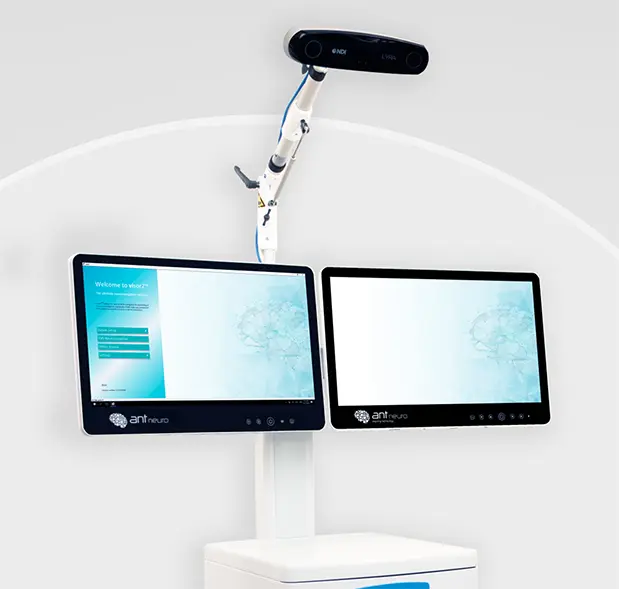
Building on our extensive experience in navigated TMS, visor2™ now provides dedicated support for transcranial focused ultrasound workflows.
The new Transducer Target workflow enables precise targeting of deep brain structures by allowing users to define both the intended anatomical target and the optimal transducer position on the scalp. visor2 displays the distance between the scalp and the target, helping users verify that the selected target lies within the effective focal range of the transducer. Users can also account for the thickness of coupling media, such as gel pads, by applying a transducer offset, ensuring that the acoustic focus remains aligned with the intended brain target while maintaining optimal acoustic coupling.
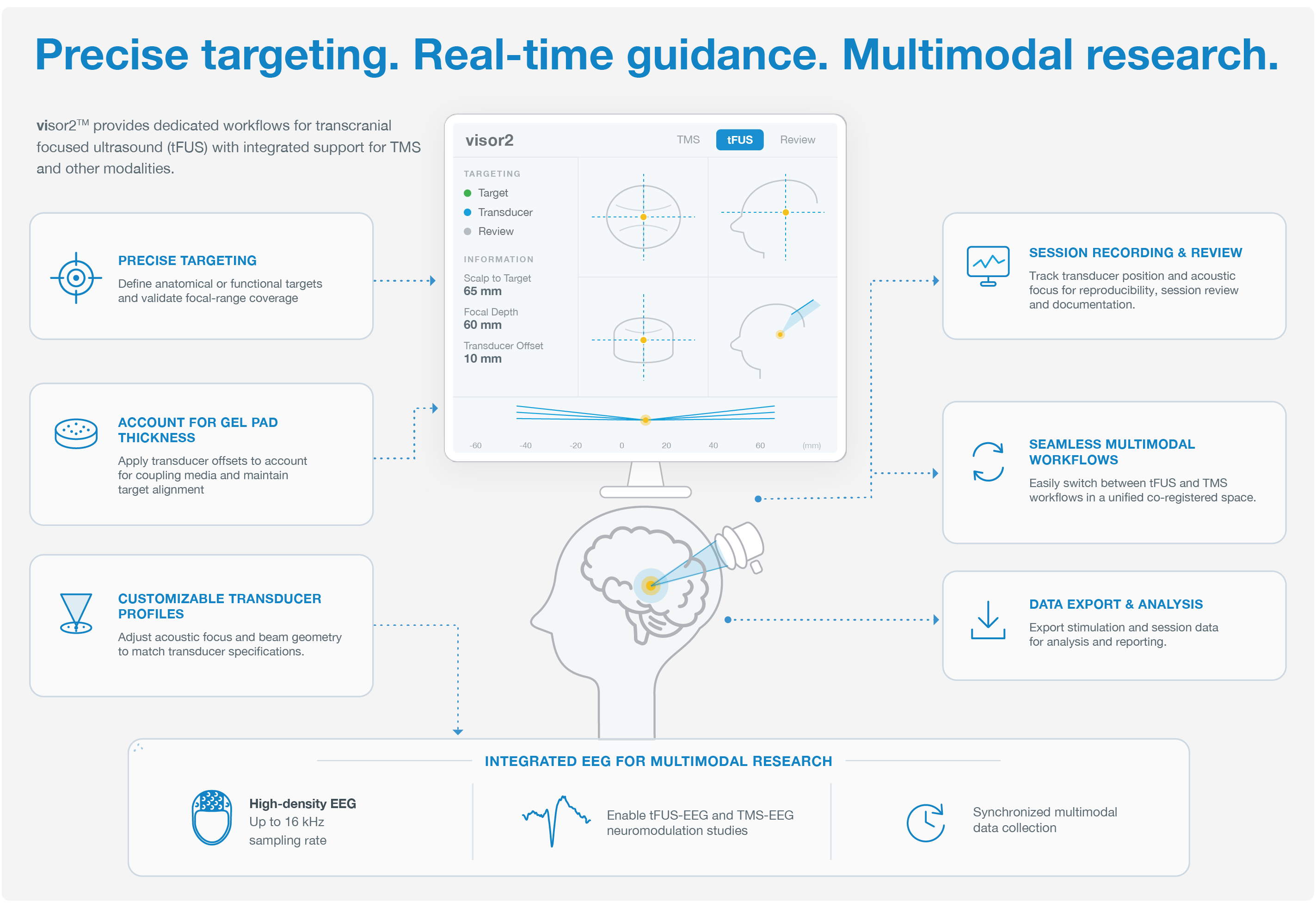
visor2 also supports customizable transducer profiles with user-defined focal depths and beam geometries. The resulting acoustic focus and stimulation volume are visualized directly within the participant's anatomy, enabling researchers to assess target accessibility, optimize transducer placement, and better understand the spatial relationship between the focal zone and the intended brain target.
Session recording and review capabilities allow researchers to document transducer positioning, tilt, and acoustic focus placement throughout the experiment. These tools support reproducibility, quality assurance, and longitudinal study designs by providing a complete record of stimulation delivery.
By combining subject-specific anatomical targeting, acoustic focus visualization, and real-time navigation feedback, visor2 helps improve targeting consistency and reproducibility across sessions and participants.
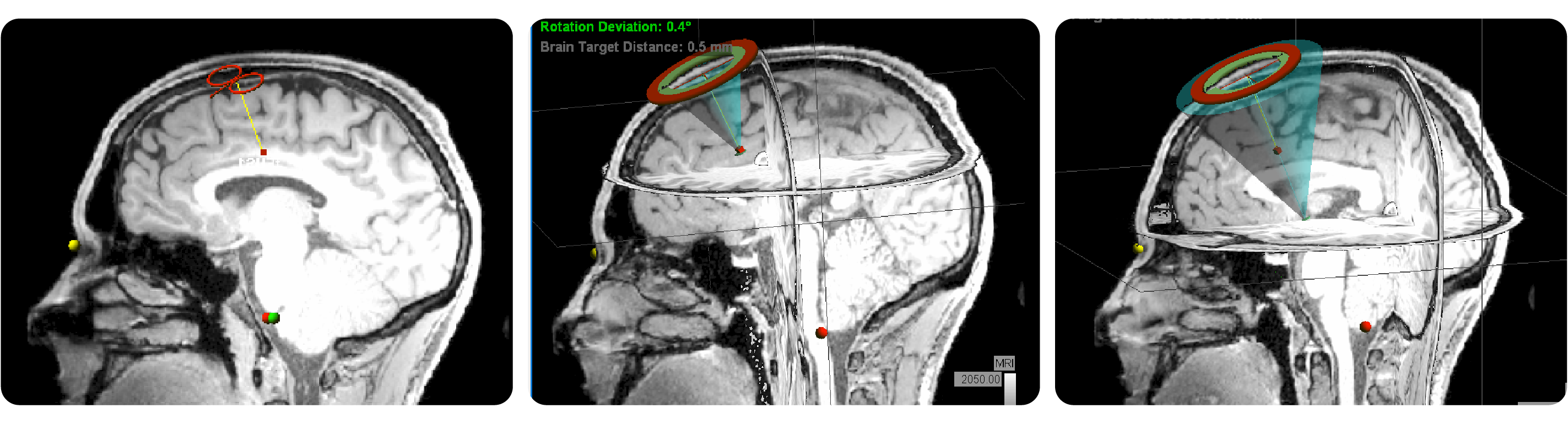
From left to right: Transducer-specific targeting based on individual anatomy, real-time on-target sonification guidance, and ultrasound beam visualization for target verification and treatment planning.
Integrated Multimodal Navigation
For studies combining tFUS with TMS, visor2 enables seamless switching between stimulation modalities within the same neuronavigation session. Users can move between TMS and tFUS workflows without interrupting the session or losing data.
Session data from both modalities are stored within a unified workflow, allowing researchers to visualize stimulation locations, access stimulation histories, and export synchronized datasets for downstream analysis and reporting.
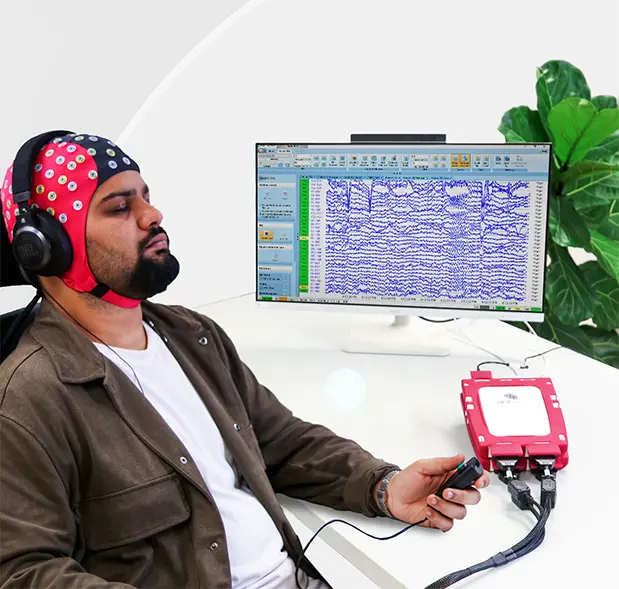
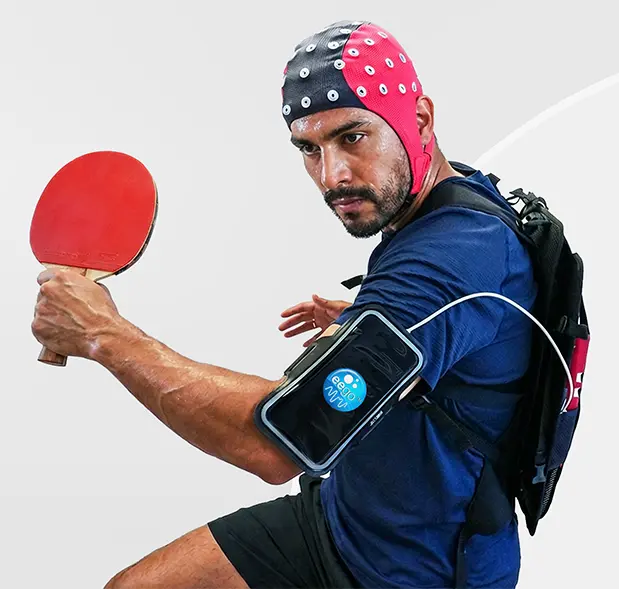
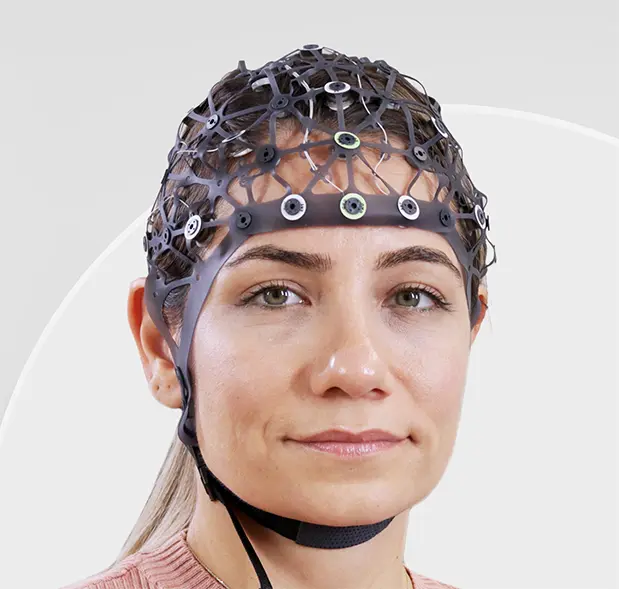
For electrophysiological monitoring, the eego™ mylab platform integrates seamlessly with visor2 and supports high-density EEG recordings at sampling rates up to 16,384 Hz, enabling advanced tFUS-EEG and TMS-EEG research workflows.
Publications

Neuronavigation-guided transcranial focused ultrasound stimulation
Transcranial focused ultrasound to the posterior cingulate cortex modulates default mode network and subjective experience: a fMRI pilot study
Read More
Neuronavigation-guided low-intensity transcranial focused ultrasound neuromodulation
Transcranial focused ultrasound to the amygdala modulates brain activity and improves symptoms in mood and anxiety disorders: a double-blind sham-controlled clinical study
Read MoreDISCLAIMER: The tFUS, EEG-TMS, and dual-coil navigation functionalities of visor2 are intended for research and educational purposes only and have not been cleared or approved for clinical use.